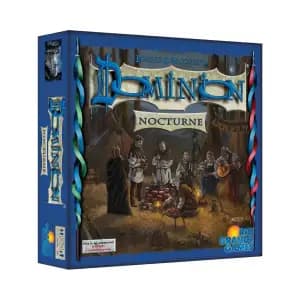
Deck-building is one of the defining mechanics of modern tabletop gaming, and for good reason. The simple thrill of starting with a weak deck and steadily shaping it into a powerful engine is deeply satisfying. If the term is new to you, here is what it means and how to find a great first game.
How deck-building works
In a deck-building game, every player starts with the same small, basic deck of cards. As the game goes on, you use those cards to acquire better ones from a shared market, adding them to your deck. Over time your deck improves, letting you do more powerful things. The core loop, play cards, buy better cards, repeat, is easy to learn but rich to master. Most turns you draw a small hand, spend the value on it to buy from the market, then discard and draw again. It feels gentle at first, but the decisions add up fast.
One thing that surprises new players is the shuffle. Any card you buy goes into your discard pile, not your hand. When your draw pile runs out, you shuffle the discard pile to make a new one. So a card you buy now might not turn up for a few turns. Planning around that rhythm is a big part of the fun.
Why the genre is so satisfying
The appeal comes from visible progress. A few qualities make it special:
- A growing sense of power as your deck gets stronger each turn.
- Meaningful choices about which cards to add and which to avoid.
- Replayability, since the available cards change how each game develops.
Few mechanics give such a clear feeling of building something over the course of a game. You can almost watch your deck come together in front of you.
The skill of a lean deck
One lesson every deck-builder teaches is that bigger is not always better. Adding too many cards can clog your deck with options you do not need. Learning when to add a card and when to skip one, keeping your deck focused and efficient, is the heart of the strategy, and it is what keeps players coming back.
Many games also let you remove, or trash, weak starting cards. New players often forget this, but cutting a couple of basic cards early can make a real difference. A small, sharp deck draws into its best cards far more often than a bloated one.
Styles of deck-building game
The mechanic appears in many forms:
- Pure deck-builders, where improving your deck is the whole game.
- Deck-builders with a board, which add movement and area control.
- Cooperative deck-builders, where the group builds decks to beat a shared challenge.
- Legacy and campaign versions, where your deck evolves across many sessions.
Trying different styles is a great way to work out what you enjoy most. Some players love the head-to-head tension of a competitive game, while others prefer teaming up against the box in a cooperative one.