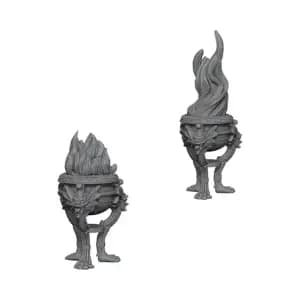
Painting miniatures is one of the most satisfying hobbies around. It is calming, creative, and the moment a model goes from bare plastic to fully painted is genuinely rewarding. Best of all, you can get started with very little, and your results improve quickly with practice.
The essential tools
You do not need an expensive setup to begin. A short starting list covers everything:
- A few paints, a handful of base colours, a wash, and a lighter highlight colour.
- One good brush, since a quality general-purpose brush beats a cheap multipack.
- A water pot and palette, where an old jar and a tile or plate work fine.
- A primer, to help paint stick to the model.
Many beginner paint sets bundle these basics together, which is the easiest way to start. A clean, well-lit table and a comfortable chair matter more than people expect, since painting is far easier when you can see what you are doing.
Prime before you paint
Priming is the step beginners most often skip, and it makes the biggest difference. A thin coat of primer gives the paint a surface to grip, so colours go on smoothly and do not rub off. A grey or white primer is a friendly choice for newcomers because it keeps later colours bright. Spray primer is quick, but a brush-on primer works just as well indoors when you cannot get outside.
A simple three-step method
You can get great-looking models with a straightforward routine:
- Base coat, blocking in the main colours with thinned paint and a couple of coats.
- Wash, where a dark wash flows into the recesses and instantly adds shadow and depth.
- Highlight, with a lighter colour brushed lightly over raised areas to bring the model to life.
This base, shade, highlight approach is the foundation of nearly all miniature painting. Once it feels natural, almost every other technique you learn builds on top of it.
Thin your paints
The most important habit to learn early is thinning your paints with a little water. Paint straight from the pot goes on thick and hides detail. A few thin coats look far better than one thick one. It feels slower at first but quickly becomes second nature. A good guide is to aim for the consistency of milk rather than cream.
Looking after your brushes
A good brush rewards a little care. Never let paint dry in the bristles, and rinse the brush often while you work. After a session, wash it gently with a touch of soap and reshape the tip to a point before it dries. One well-kept brush will outlast several neglected ones, which saves money and gives you a finer point for detail.